
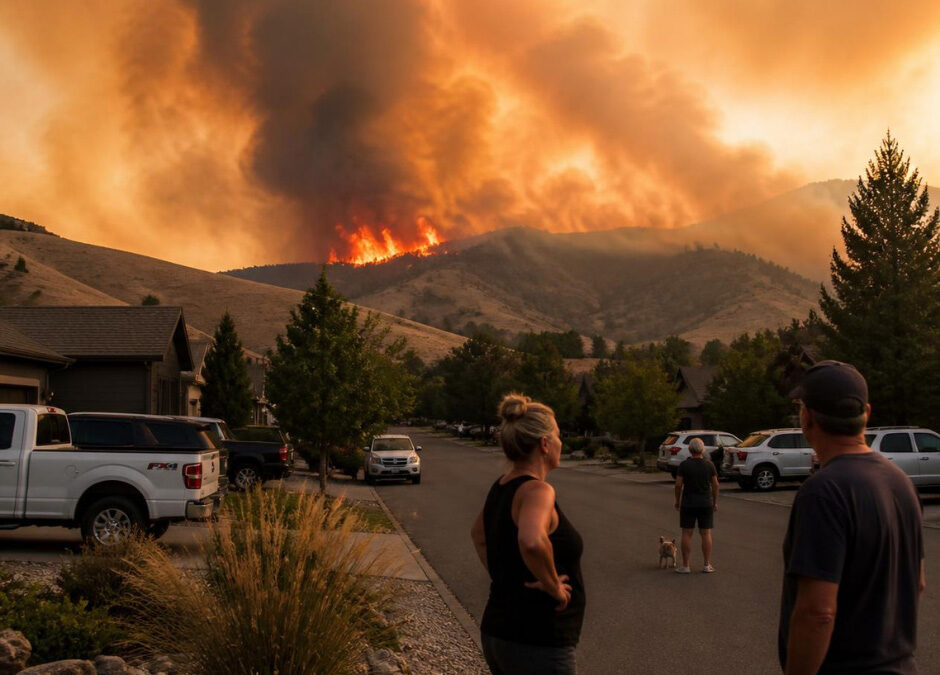
Montana’s dense forests, expansive prairies, and long summer heatwaves create persistent wildfire conditions across Big Sky Country. Summer dry spells paired with high mountain winds make timberland, agricultural acreage, and residential neighborhoods vulnerable to swift-moving wildfires.
Reviewing policy structure, understanding regional fire dynamics, and preparing property boundaries helps property owners manage financial exposure before smoke fills the valleys.
Regional Wildfire Risks Across Montana
Wildfire behavior varies significantly across Montana’s geography, moving from heavy forest timber in the western mountains to grass and prairie fires in the east.
Kalispell & the Flathead Valley
Flanked by dense coniferous forests and Glacier National Park, the Flathead Valley experiences intense wildfire seasons. Dry timber, summer lightning strikes, and canyon winds create fast-burning forest fires that frequently threaten properties throughout Kalispell, Columbia Falls, and rural valley acreage.
Whitefish & North Flathead County
Properties surrounding Whitefish sit directly adjacent to mountain forests and dense timber stands. Wildfire risks in this area often stem from timberland fires where embers travel significant distances on wind currents, creating potential exposure for residential structures situated along mountain slopes and lakeshores.
Bozeman & Gallatin County
Rapid development along the Gallatin Valley perimeter puts properties near timberlines and steep mountain canyons. Dry summer conditions combined with strong valley winds increase wildfire potential throughout Bozeman, Big Sky, and surrounding mountain subdivisions.
Missoula & Western Montana
Surrounded by five mountain ranges and steep canyon corridors, Missoula regularly faces heavy wildfire smoke and nearby forest fires. Canyon topography creates natural wind funnels, causing brush and forest fires to move unpredictably along valley floors and hillside developments.
Billings & Eastern Prairie Regions
Unlike western timber zones, wildfire risk in Billings and eastern Montana centers on open rangeland, dry brush, and agricultural acreage. Prairie grass fires burn rapidly over long distances, threatening farm outbuildings, livestock fencing, and suburban outskirts along the Yellowstone River valley.
Across All of Montana
Whether dealing with heavy timber fuels in mountain passes or fast-burning prairie grass across eastern plains, seasonal wildfire hazards impact property owners state-wide.
Insurance Structure for Wildfire Losses
Standard commercial and homeowners insurance policies generally address direct loss caused by fire, lightning, and smoke. However, specific coverage limits, deductible terms, and policy endorsements differ depending on carrier guidelines and risk zones.
-
- Dwelling / Structure Coverage: Addresses reconstruction or repair costs for the main building following direct fire or heat damage.
- Outbuildings & Detached Structures: Applies to barns, detached garages, sheds, and fencing damaged by wildfire.
- Personal Belongings: Covers personal property, tools, and household items destroyed or damaged by fire and heavy smoke.
- Loss of Use / Living Expenses: Helps offset temporary housing, meal costs, and essential expenses if a property becomes uninhabitable during fire repairs or mandatory evacuations.
- Extended Replacement Cost: Optional policy provisions that add a percentage buffer above primary limits to help cover post-disaster labor and material cost spikes.
Property Preparation & Mitigation Measures
Implementing defensive physical measures around a property helps reduce structural ignition risks and supports policy maintenance:
- Maintain Defensible Space: Clear flammable vegetation, fallen pine needles, dry brush, and dead branches within a 30-foot radius of all structures.
- Clear Roofs and Gutters: Remove pine needles, leaves, and organic debris from roof valleys and rain gutters to prevent ember ignition.
- Screen Vents & Openings: Install 1/8-inch metal wire mesh over soffit, attic, and crawlspace vents to prevent windblown embers from entering structural voids.
- Store Flammable Items Away: Move firewood stacks, propane tanks, and outdoor lumber at least 30 feet away from primary dwelling walls.
- Review Coverage Limits Regularly: Confirm policy limits keep pace with current regional building costs and material inflation across Montana.
Review Montana Coverage Details
Checking insurance coverage details prior to peak wildfire season helps confirm policy limits reflect current reconstruction costs.
Elevare Insurance Agency works with policyholders across Montana to evaluate personal property, seasonal homes, and commercial coverage options.
Contact Us to review your homeowners policy.