
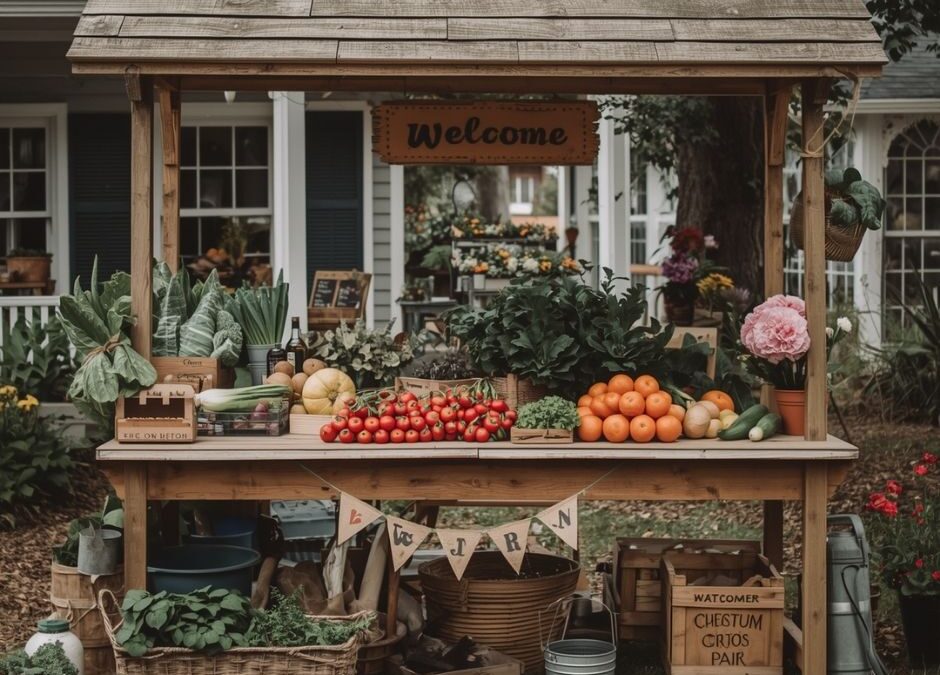
As the ground thaws this April, a new trend is blooming across American neighborhoods: the “Gig” Garden. From selling heirloom tomato starters to offering weekend landscaping and power-washing services, the 2026 side-hustle explosion is in full swing.
Driven by a mix of passion, supplemental income needs, and the ease of digital marketplaces, more homeowners than ever are turning their backyards into small businesses. But before you post that first “for sale” sign on Facebook Marketplace or load up the mower, there is a hidden risk growing in your backyard.
Many homeowners assume their standard policy covers their hobbies. However, in the eyes of an insurance carrier, the moment a hobby generates consistent income, the rules change. Here is everything you need to know about insurance for home-based businesses in 2026 and how to protect your budding enterprise.
The Homeowners Policy Gap: Why “Standard” Isn’t Enough
Most standard homeowners insurance policies are designed strictly for personal use and residential liability. They are built on the assumption that your home is a place of rest, not a place of commerce. When you transition into a “Gig Garden” or a mobile spring service, you hit two major coverage walls.
Property Limits for Business Equipment
A typical homeowners policy has a very low sub-limit for “property used primarily for business purposes.” Often, this limit is as low as $2,500 for items kept inside the home and even less—sometimes just $500—for business property away from the premises.
If you’ve invested in professional-grade tillers, commercial-grade lawnmowers, or high-end hydroponic systems, a standard policy will leave you woefully underinsured in the event of fire or theft.
The Commercial Liability Exclusion
This is the most dangerous gap. Standard liability coverage protects you if a guest trips over a garden hose while visiting for a BBQ. However, if that same person is on your property to purchase a product or service, your personal liability coverage often vanishes.
Most policies explicitly exclude “bodily injury or property damage arising out of or in connection with a business conducted from an insured location.” This means if a customer slips on your porch while picking up a flat of petunias, you could be facing a massive legal bill and settlement entirely out of pocket.
Protecting the “Garden-to-Table” Operation
If you are selling produce, honey, fresh-cut flowers, or started seedlings, you aren’t just a gardener; you are a food and plant producer. This carries unique liability for side hustles that many beginners overlook.
Product Liability: The Hidden Risk
What happens if a customer claims they became ill from your “organic” greens or that your honey contained an allergen you didn’t disclose? Even if the claim is meritless, the cost of defending yourself in court can be devastating.
Product liability insurance is essential for anyone selling items meant for consumption or topical use. In 2026, many carriers have introduced “Micro-Producer” endorsements that are surprisingly affordable, specifically designed for those selling at local farmers’ markets or from their front porch.
The “Attractive Nuisance” of a Farm Stand
If you set up a roadside stand or invite people onto your property for a “U-Pick” experience, you have increased your risk profile. You are now responsible for maintaining a safe “commercial” environment. This includes:
- Parking Safety: Ensuring customers aren’t pulling off into dangerous ditches.
- Walking Paths: Keeping areas free of holes, tools, and tripping hazards.
- Animal Liability: If you have farm animals or pets near the sales area, their behavior becomes a business liability.
Mobile Spring Services: Landscaping and Power Washing
April is the peak month for “Spring Cleanup” hustles. Whether you are hauling away winter debris, cleaning gutters, or power-washing driveways, you are performing high-risk physical labor.
Care, Custody, and Control
One of the most common insurance claims in spring services involves “Care, Custody, and Control.” If you are power washing a client’s driveway and accidentally strip the paint off their garage door or crack a window with high-pressure water, a standard homeowners policy will not help you.
You need General Liability insurance that specifically covers the work you are doing. Without it, one afternoon of work could result in a repair bill that wipes out your entire month’s profit.
The Risk of High-Altitude Work
Gutter cleaning is a staple April side hustle, but it is also one of the most dangerous. Falling from a ladder is a leading cause of serious injury. If you are working for yourself, you don’t have Workers’ Comp. If you are injured on a client’s property, their homeowners insurance may deny the claim because you were there in a professional capacity.
Securing an “Individual Contractor” policy may help protect you against a single fall leading to medical bankruptcy.
The 2026 Landscape: Digital Platforms and Modern Risks
In 2026, the way we find customers has changed. Apps and digital marketplaces have made it easier than ever to scale a side hustle, but they also create new digital footprints that insurance carriers can see.
Transparency in the Digital Age
Carriers now use sophisticated data tools to assess risk. If you have an active business page on social media or a high volume of transactions on payment apps, it is only a matter of time before your insurance provider identifies the business activity.
Being proactive is always better than having a claim denied later. By disclosing your side hustle to your agent, you can often find “Hybrid” policies that cover both your home and your micro-business under one roof.
Cyber Liability for Small Sellers
Even a “Gig Garden” might collect customer data—emails for a newsletter, phone numbers for text alerts, or credit card info through a mobile reader. In 2026, even small-scale sellers are targets for data breaches. Including a small cyber-liability add-on to your business coverage is a smart move to protect your customers’ trust and your own bank account.
Solutions: How to Bridge the Gap Affordably
Protecting your side hustle doesn’t have to mean buying an expensive commercial policy designed for a massive corporation. There are three common ways to get protected:
- Home-Based Business Endorsement: This is often the cheapest option. It “tags” a small amount of business coverage onto your existing homeowners policy. It’s perfect for low-revenue hobbies like selling seedlings or crafts.
- In-Home Business Policy: This is a standalone policy that provides more robust coverage than an endorsement but is still scaled for a home-based operation. It usually includes higher property limits and broader liability.
- Businessowners Policy (BOP): If your “Gig Garden” has grown into a full-time venture with employees or significant equipment, a BOP is the gold standard. It bundles property and liability into one comprehensive package.
Don’t Let Your Side Hustle Wilt
April is a season of growth and opportunity. Whether you are planting seeds for a future floral empire or just looking to make some extra cash for summer vacation, don’t let a lack of insurance coverage put your hard work at risk.
Why an April Audit Matters: The best time to protect your side hustle is before your first big sale or contract of the season. A quick review of your coverage ensures that your extra income remains a blessing, not a liability.
Ready to protect your “Gig Garden”? Don’t guess when it comes to your liability. Give our agency a call for a “Side-Hustle Checkup.” We can help you identify the gaps in your current homeowners policy and find a solution that fits your budget and your business.